

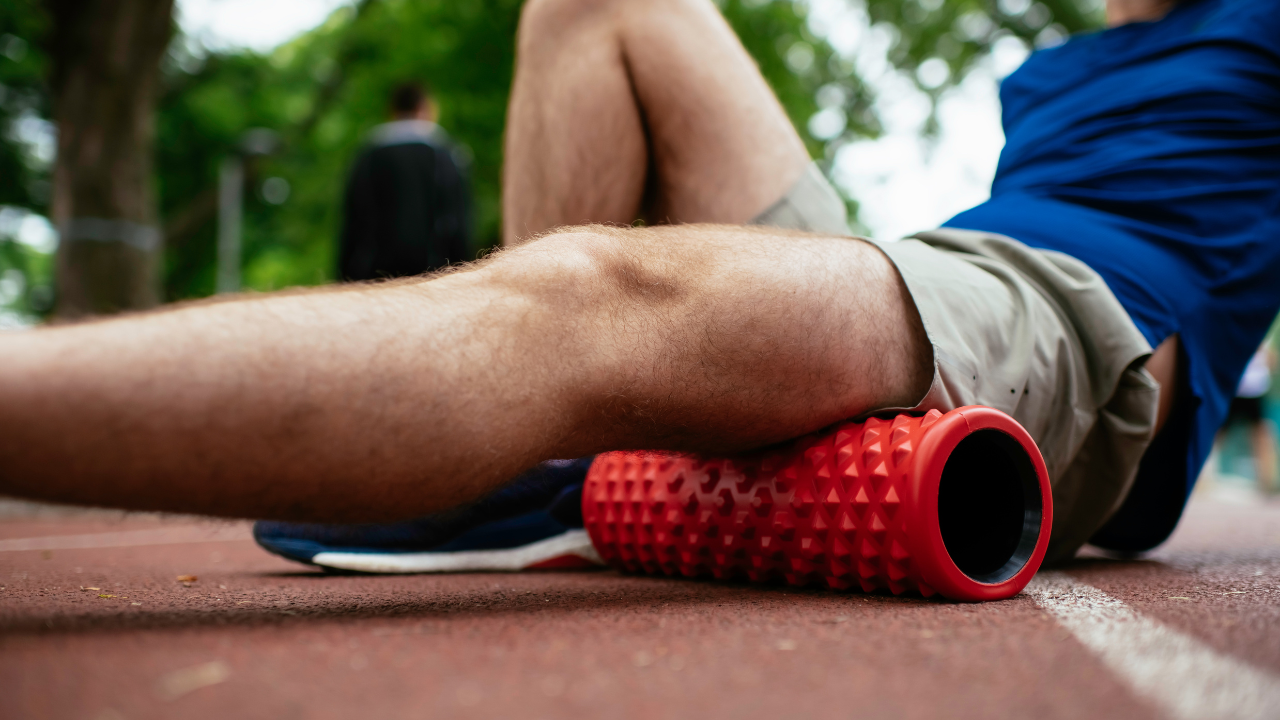
You’ve probably seen them in the stretching area: those firm foam cylinders that people lie on, roll across, and occasionally wince over. If you’ve ever wondered what foam rolling actually does, whether it’s worth trying, and how to do it without feeling lost, this guide is for you.
The good news is that foam rolling is simple, beginner-friendly, and genuinely feels good once you get the hang of it. Think of it as a self-massage you can do in a few minutes to help your muscles feel looser and more comfortable. Here’s everything you need to get started.
What Is Foam Rolling?
Foam rolling is a form of self-massage, sometimes called self-myofascial release. In plain terms, you use your own body weight to apply gentle, controlled pressure to your muscles as you roll them over the foam.
That pressure helps ease areas of tightness and tension, a lot like a massage therapist working out a knot, except you’re in control of where and how much. It’s a low-cost, easy tool that anyone can learn.
Why It Feels So Good (and What It Actually Does)
There’s a reason foam rolling has become a staple in gyms everywhere. Used regularly, it can:
- Ease muscle tightness and tension, helping stiff areas feel more relaxed
- Improve your range of motion temporarily, so you move more freely
- Support your warm-up, helping loosen you up before a workout
- Aid recovery, as a soothing way to unwind tired muscles afterward
- Simply feel great, offering a few relaxing minutes to check in with your body
You don’t need to overthink the science. If an area feels tight and rolling it helps it feel better, that’s a win.
How to Foam Roll: The Basics
Foam rolling is easy once you know a few simple guidelines:
- Roll slowly. Move at a gentle, controlled pace rather than rushing back and forth.
- Spend time on each area. Around 30 to 60 seconds per muscle group is a good starting point.
- Pause on tender spots. When you find a tight area, rest on it gently for a few breaths and let it relax.
- Stay on muscle, not bone or joints. Roll the soft, muscular parts of your body and avoid rolling directly over joints.
- Keep breathing. Relax and breathe steadily rather than holding your breath.
A little discomfort on a tight spot is normal, but it should never be sharp or painful. Ease off if it does.
Best Areas to Start
If you’re not sure where to begin, these beginner-friendly areas are a great place to start:
- Calves: roll from ankle to just below the knee.
- Quads (front of thighs): great after leg day or lots of walking.
- Hamstrings (back of thighs): helps with that all-over lower-body tightness.
- Glutes: often tight from sitting, and they respond well to rolling.
- Upper back: gentle rolling here can feel wonderful, especially if you sit a lot.
- Outer thighs: roll gently, since this area can feel sensitive at first.
Pick one or two spots that feel tight and start there. You don’t need to do everything at once.
A Few Simple Do’s and Don’ts
To keep foam rolling safe and effective:
- Do use it before a workout to loosen up, or after to help you recover.
- Do start gently and build up as you get more comfortable.
- Don’t roll directly on your lower back, neck, or any joints.
- Don’t push through sharp pain. Discomfort on a tight muscle is fine, but pain is a signal to stop.
- Do check with a doctor or trainer first if you have an injury or any concerns.
Try This at LVAC
Foam rolling is easy to add to your routine when the tools and guidance are right there, and LVAC makes it simple.
- Stretching and recovery areas give you the space and equipment to roll out comfortably before or after your workout.
- Personal trainers can walk you through a simple foam rolling routine tailored to your body and your tight spots.
- Group fitness classes with a mobility or stretching focus pair perfectly with foam rolling.
- Recovery amenities like the sauna and pool are a great way to round out your recovery routine.
Not sure where to start? Ask a team member or trainer. Helping you feel your best is what we’re here for.
Roll Your Way to Feeling Better
Foam rolling is one of the simplest, most satisfying ways to help your body feel looser, more comfortable, and ready for whatever’s next. It only takes a few minutes, it works for every fitness level, and it might just become your favorite part of the workout. Start slow, focus on the areas that feel tight, and enjoy the results.
Ready to give it a try? Visit the stretching area at your nearest LVAC, or connect with a trainer in-club or online. We’d love to help you feel better, one roll at a time.
How much is an LVAC membership compared to other gyms locally?
What amenities does LVAC include that other gyms in the area don’t?
Does LVAC raise membership prices annually?
What free extras come with LVAC?
Is LVAC open 24/7?